Horse Herd Hierarchy: How Horses Really Organise Their Social Lives
Oct 02, 2026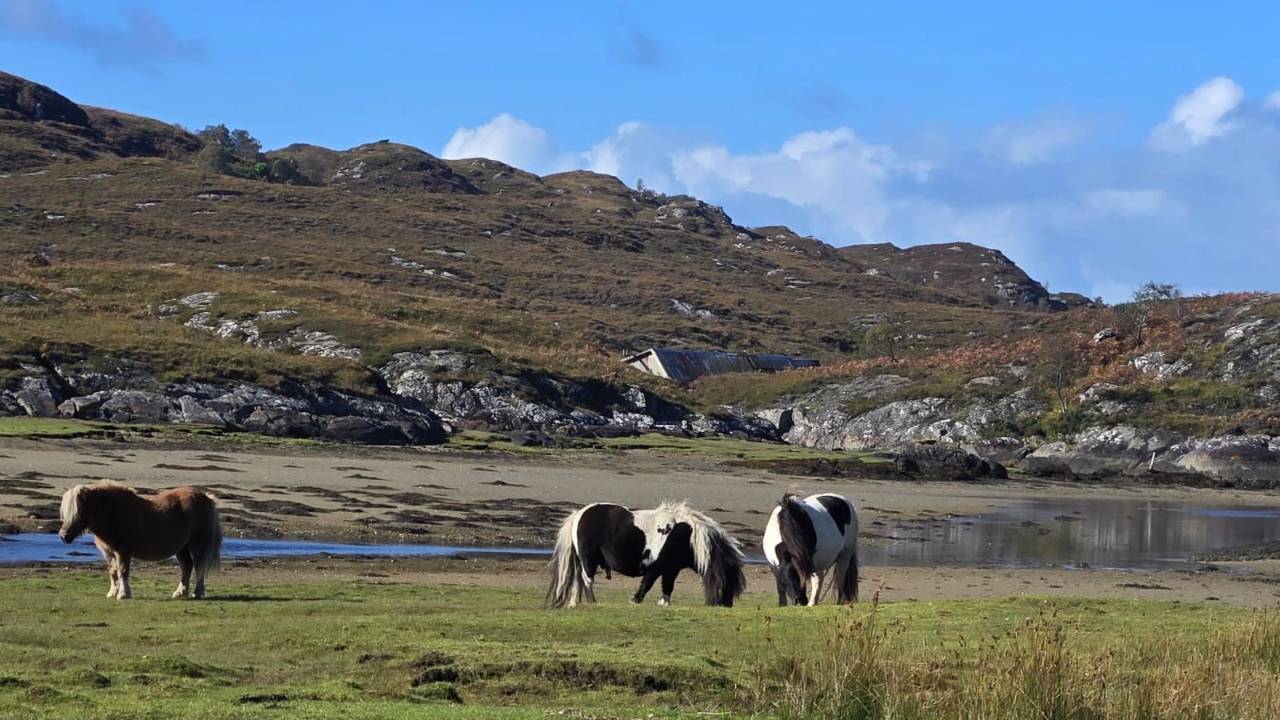
Quick answer: Horses don't live in a rigid pecking order ruled by a dominant "lead mare". In free-living herds they form small, stable family groups built on long-term relationships. Leadership is shared and depends on the situation, and most social behaviour is friendly: grooming, resting together and moving in synchrony. Much of the conflict seen in domestic horses comes from management, such as changing groups and concentrated food or gateways, rather than from dominant personalities.
How do horses live in the wild?
Free-ranging and feral horses live in small groups called bands, usually one or a few stallions with several mares and their young, while young males often form bachelor groups (Linklater, 2000). Bands are fluid at the edges but built around stable core relationships that can last for years.
Those relationships matter. In one study of feral horses, mares with stronger social bonds had greater reproductive success, independent of their rank (Cameron et al., 2009). Friendship, not dominance, was the stronger predictor of doing well.
Is there really a pecking order in horses?
Dominance relationships do exist between horses, but they mostly show up around limited resources such as a single hay pile or a narrow gateway. They describe how two horses manage a specific competition, not a fixed ranking that runs their whole social life.
Most of the time, herd life is built on affiliative behaviour:
- Mutual grooming, usually with preferred partners. Grooming at the withers has been shown to lower heart rate (Feh and de Mazières, 1993).
- Proximity seeking, choosing to graze and rest near particular companions.
- Synchronised movement, travelling, resting and grazing together.
Is the lead mare a myth?
The idea of a single mare who leads the herd is appealing, but research doesn't support it as a fixed role. A study of feral horse groups found that movement could be started by different individuals, and leadership was not tied to rank (Krueger et al., 2014). Leadership is better understood as a shared, situational process based on trust and relationships.
How does domestication change horse social behaviour?
Many common management practices remove the things that keep herds calm.
- Loss of social choice. Horses are often placed in groups chosen by people, with little say over who they live with.
- Lack of continuity. Changing groups, limited turnout and individual stabling interrupt relationships. Stable group membership is linked to less aggression (Hartmann et al., 2012).
- Resource pinch points. Feed, water and gateways concentrated in one place create conflict that wouldn't occur with more space. Feeding management and group composition both affect how much aggression occurs in group-housed horses (Burla et al., 2016).
When conflict happens at these pinch points, it's often labelled as a "dominant personality" or aggression. In reality, the environment is creating competition the horses can't avoid. I explore this further in Aggression in Horses: What Your Horse Is Trying to Tell You.
Why social choice matters for welfare
The Five Domains Model assesses welfare through behavioural opportunities and mental experience, as well as nutrition, health and environment (Mellor et al., 2020). Choosing companions and controlling social interactions is a core part of a horse's agency, and agency is closely tied to positive wellbeing. For more on this, see Equine Agency and Cooperative Care.
Where do humans fit in a horse's social world?
We are part of our horses' social landscape too. Horses respond to our emotional state: when handlers expected something worrying, their horses' heart rates rose (Keeling et al., 2009). In my own work, I've also seen horses offer calming closeness to a distressed person in the same way they would to a bonded herd member. Relationships with horses can be a source of calm in both directions, when the horse has the freedom to choose.
How to support your horse's social needs at home
- Audit continuity. How long have your horses been together, and how often is their contact interrupted? Aim for stable groups with consistent, uninterrupted time together.
- Facilitate choice. Make sure your horse can disengage or say "no" during interactions, with you and with other horses, and respect it when they do.
- Identify pinch points. Watch where conflict happens. Spread hay into more piles than there are horses, widen gateways and give space around water.
- Build an enabling environment. For horses with past trauma or anxiety, focus on choice and enrichment, such as scent-based activities, rather than training. See Beyond the Basics.
- Observe and record. Note who grooms whom, who stands together and where tension appears. Equine Voice helps you track these patterns over time, so you can see changes as they happen.
Frequently asked questions
How do I introduce a new horse to my herd?
Introduce gradually, starting with contact over a safe fence. Then pair the new horse with one calm companion before joining the wider group. Provide plenty of space and multiple forage points to reduce competition.
Why does my horse always get chased off the hay?
This is usually a resource pinch point rather than a personality problem. Add more hay piles than horses, spread them widely and watch whether the chasing reduces.
Do horses have best friends?
Yes. Horses form strong preferred partnerships, shown through mutual grooming, staying close and moving together. These bonds can last for years.
Is a dominant horse a problem?
Usually not. Apparent dominance often reflects competition for limited resources. Changing the environment tends to reduce it.
Want to go deeper? I explore herd relationships and social welfare in my free live Q&A sessions, where you can bring questions about your own horses. Find the next session here.
References
- Burla, J.-B., Ostertag, A., Patt, A., Bachmann, I. and Hillmann, E. (2016) Effects of feeding management and group composition on agonistic behaviour of group-housed horses. Applied Animal Behaviour Science, 176, 32–42.
- Cameron, E.Z., Setsaas, T.H. and Linklater, W.L. (2009) Social bonds between unrelated females increase reproductive success in feral horses. Proceedings of the National Academy of Sciences, 106(33), 13850–13853.
- Feh, C. and de Mazières, J. (1993) Grooming at a preferred site reduces heart rate in horses. Animal Behaviour, 46(6), 1191–1194.
- Hartmann, E., Søndergaard, E. and Keeling, L.J. (2012) Keeping horses in groups: a review. Applied Animal Behaviour Science, 136(2–4), 77–87.
- Keeling, L.J., Jonare, L. and Lanneborn, L. (2009) Investigating horse–human interactions: the effect of a nervous human. The Veterinary Journal, 181(1), 70–71.
- Krueger, K., Flauger, B., Farmer, K. and Hemelrijk, C. (2014) Movement initiation in groups of feral horses. Behavioural Processes, 103, 91–101.
- Linklater, W.L. (2000) Adaptive explanation in socio-ecology: lessons from the Equidae. Biological Reviews, 75(1), 1–20.
- Mellor, D.J., Beausoleil, N.J., Littlewood, K.E., McLean, A.N., McGreevy, P.D., Jones, B. and Wilkins, C. (2020) The 2020 Five Domains Model: including human–animal interactions in assessments of animal welfare. Animals, 10(10), 1870.
About the author
Nicky Ross is an applied equine behaviourist and founder of Horse Play Highlands, with around 20 years of experience in animal behaviour. Nicky's case study work is published in CABI's peer-reviewed literature (Ross, 2025).
Want to dive deeper? Join our free masterclass, 'Through Horses' Eyes'.
